Episode Transcript
Part 1: Trump’s #1 Priority The SAVE America Act
INTRO LISA SINGER
From the Independent Times Newsroom, this is an audio edition of our latest report. Published on April 12th 2026. Narrated for you to take the news on the go. I’m Lisa Singer, Editor-in-Chief of Independent Times News.
In January 2026, Republican Senator Mike Lee stood on the Senate floor and delivered a blunt warning: “If we don’t secure our elections now, we will never secure them.” Just days later, President Trump made it crystal clear he would not sign any major legislation unless the SAVE America Act reached his desk. For Trump, this single bill has become his top priority. He has repeatedly called it “the most important piece of legislation of my entire second term.” And yet, months later, the bill remains stalled in the Senate.
Here’s what makes the standoff so striking: 81% of Americans say that requiring identification is “not too much to ask” of voters. That includes large majorities of Democrats, Republicans, and Independents.
We begin with a simple question: How did the SAVE America Act become President Trump’s number one priority?
Today, Leyla Gulen joins us to narrate Part 1 of our series on the SAVE America Act. Thank you for joining us.
NARRATED BY LEYLA GULEN
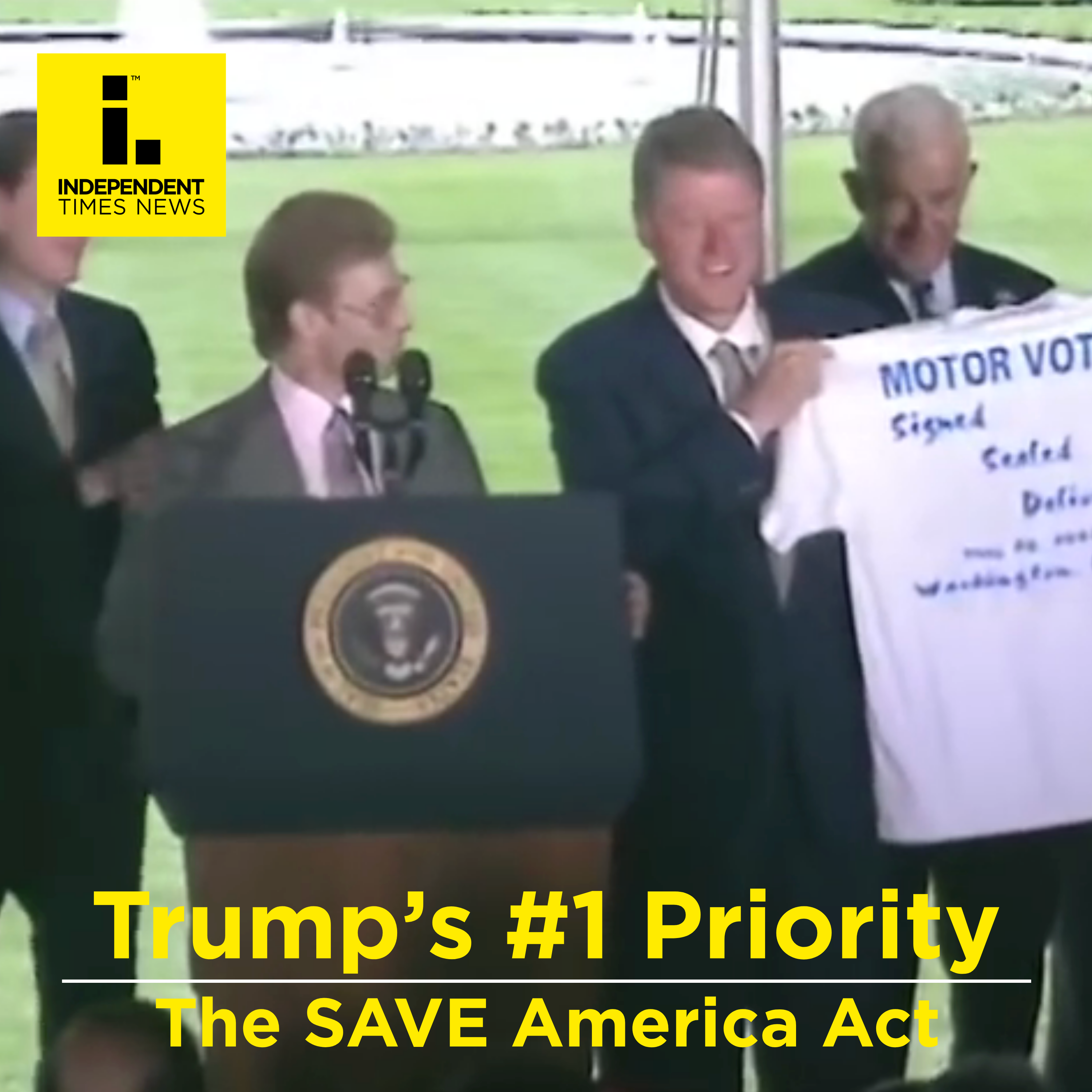
On a sunny spring morning, May 20, 1993, President Bill Clinton stood on the South Lawn of the White House and signed a bill that many hoped would transform American democracy. Surrounded by supporters, he declared the National Voter Registration Act, better known as the "Motor Voter" law, as a major step forward for voter access. Clinton said that day: "Voting is an empty promise unless people vote. Now, there is no longer the excuse of the difficulty of registration."
He called the law "our newest civil rights law". He expressed confidence that making registration easier at DMVs, by mail, and through public assistance offices would bring more working families, young people, and everyday Americans into the political process.
The 1993 Motor Voter Act required states to offer voter registration when people apply for or renew a driver's license, relying on applicants to self-certify, under penalty of perjury, that they are U.S. citizens. At the time, few states issued any form of driver's license to noncitizens.
While the 1993 NVRA was designed as a three-part system covering DMV registration, mail-in voting, and voter roll maintenance, it is the "Motor Voter" registration provisions that have become the primary target of the 2026 SAVE America Act.
Before the 1993 National Voter Registration Act, registering to vote was often difficult and inconvenient. Most states required eligible citizens to visit a county registrar's office in person during limited business hours. The process involved navigating a confusing patchwork of rules and offices, which was time-consuming and discouraged many Americans from registering. The 1993 law aimed to make voter registration easier and more accessible. It required states to offer registration opportunities at Department of Motor Vehicles (DMV) offices, by mail, and at certain public assistance offices. The goal was to increase participation in democracy by reducing barriers for everyday Americans.
The impact of the Motor Voter Act was immediate. In the 1992 election, the national registration rate was 70.6%. By 1996, with the law in effect for just 22 months registration jumped to 74.4%. Over the decades since, the NVRA has helped register tens of millions of Americans, and according to the U.S. Census Bureau's April 2025 report, there are now roughly 174 million registered voters, about 73.6% of all eligible citizens.
Despite its voter registration success, one of the biggest modern controversies tied to the NVRA is what happens in states that issue driver's licenses or state IDs to undocumented immigrants or other noncitizens.
Under the NVRA, DMV staff must offer voter registration forms whenever someone applies for or renews a driver's license. The federal law also forbids DMV employees from discouraging someone from registering, even if they suspect the applicant isn't a citizen. Instead, applicants must attest under penalty of perjury that they're U.S. citizens before a registration can proceed.
States try to separate noncitizen license holders from voter registration databases by using:
• distinct license classes or markings indicating in bold letters "Not for Federal Identification" or "Driving Privileges Only."
• Also, the DMV uses separate computer codes to prevent those individuals from being automatically prompted to register to vote.
• And finally, the DMV performs periodic data audits comparing their DMV records with immigration databases, such as the Department of Homeland Security SAVE system to ensure only citizens are registered to vote.
Despite those safeguards, recent audits have found that administrative errors do occur.
• In August 2024, Secretary of State Wes Allen of Alabama identified 3,251 registered voters who had received noncitizen identification numbers from the Department of Homeland Security, with 25 cases involving illegal votes.
• In Georgia, a 2024 audit of 8.2 million registered voters found 20 noncitizens registered, 9 of whom had voted.
• In Louisiana Republican Secretary of State Nancy Landry's review of approximately 2.96 million registered voters found that 83 had cast at least one vote over the past 40 years.
• In Oregon, a 2024 audit found DMV clerical, technical, and policy errors led to approximately 1,800 people being mistakenly registered to vote without proper eligibility documentation. Of those, around 42 actually cast ballots, but many were later confirmed as eligible U.S. citizens.
• In Texas, a 2025 statewide review using the federal SAVE database flagged 2,724 potential noncitizens on the voter rolls out of more than 18 million registered voters. Some flagged individuals later proved that they were U.S. citizens.
• In Virginia, since 2022, state officials have removed roughly 6,300 individuals from the voter rolls after they were identified through DMV records as potential noncitizens. Most cases involved individuals who had self-identified as noncitizens on DMV paperwork, sometimes due to simple errors, such as checking the wrong box or failing to update their records after they became naturalized citizens.
Most of these incidents appear to stem from clerical errors, computer glitches, language barriers, or failures to update records after naturalization, rather than intentional or coordinated fraud. Nevertheless, critics of the current system argue that the heavy reliance on self-attestation under the 1993 Motor Voter law makes such errors almost inevitable over time.
Republicans argue these examples show the work is far from over. As Republican Representative Mariannette Miller-Meeks of Iowa stated after the House passed the SAVE America Act, "There is still more work to do. While voting as a noncitizen is universally illegal, enforcement mechanisms are not universally implemented."
Democrats counter that noncitizen voting is already extremely rare and carries heavy penalties. Democratic Senator Jack Reed of Rhode Island argued against the bill, stating, "The way to solve this alleged problem of noncitizen voting is simply to enforce existing Federal and state law that only U.S. citizens are allowed to vote, with strong penalties for noncompliance."
These federal penalties, codified largely in the 1996 Illegal Immigration Reform and Immigrant Responsibility Act, are severe. Noncitizens who vote or even register to vote can face fines, up to a year in prison, and permanent deportation.
Yet both sides agree that every vote matters. In March 2026, Democrat Andy Thomson flipped the Boca Raton mayor's seat held by Republicans for more than 30 years by just five votes. Similarly, George W. Bush won Florida and the presidency in 2000 by only 537 votes. In races this close, even a handful of improper ballots can shift an outcome. This explains why Republicans view the SAVE America Act as a necessary preventative system update, while Democrats maintain that existing legal deterrents are sufficient without adding new barriers to the process.
For President Trump, the recent audit numbers from Texas, Virginia, and Oregon were the breaking point. Seeing thousands of potential noncitizens flagged on voter rolls after DMV transactions caused an immediate explosion of rhetoric from the White House. He has used these specific administrative glitches as evidence that the 1993 Motor Voter system is fundamentally broken, transforming what were once considered technical errors into the central theme of his 2026 legislative agenda.
This push fits into a long-running narrative he has repeated since 2016 that the current system makes it too easy for noncitizens to end up on voter rolls. After years of citing state-level reports and commission findings, Trump has now tied the issue directly to the Motor Voter law itself, calling the current DMV registration process the "Motor Voter loophole."
In his 2026 State of the Union address, President Trump stated: "I'm asking you to approve the SAVE America Act to stop illegal aliens and others who are uncommitted persons from voting in our sacred American elections. Cheating is rampant in our elections. It's rampant."
On Truth Social, Trump declared the bill: "Must be done immediately," adding, "I, as President, will not sign other Bills until this is passed... GO FOR THE GOLD."
The SAVE America Act has strong backing from conservative policy groups like the Heritage Foundation, which has urged Congress to enact it to protect election integrity, citing data from its own Election Fraud Database.
Let’s take a moment and clarify What Will Change Under the SAVE America Act. Under the current system, DMVs in most states are required to offer voter registration whenever someone applies for or renews a driver’s license. In 24 states plus Washington, D.C., this has been expanded to Automatic Voter Registration (AVR), where eligible applicants are registered by default unless they specifically opt out.
The SAVE America Act would amend the 1993 Motor Voter law by requiring documentary proof of U.S. citizenship before anyone can complete voter registration for a federal election. This change could create barriers for new voters without immediate access to strong identification, such as a valid U.S. passport, birth certificate, or naturalization papers, potentially impacting voter access.
To be clear, if the bill becomes law, the proof-of-citizenship requirement kicks in when you register for the first time or update your registration, such as a new address, name change, or if you switch political parties.
However, if you are already registered to vote and making no changes, you would not need to provide your birth certificate or marriage license just to cast a ballot this November.
Recent bill versions include affidavit options for name changes, and free or low-cost document assistance programs could mitigate many barriers for new voters. Critics counter that these measures are insufficient, arguing the bill would still impose significant time, cost, and bureaucratic hurdles on millions of eligible citizens, potentially reducing participation far more than the small number of non-citizen cases it seeks to prevent.
While former President Bill Clinton has remained silent on the SAVE America Act itself, former First Lady Hillary Clinton has been vocal in her criticism. In a February 2026 post on X, she wrote:
"You didn’t have to listen to Trump’s rambling speech last night to know that Republicans are trying to make it harder for millions of Americans to vote—especially married women. They’ve already made it clear. Time to fight back."
The practical issues for November are real. About 62 million eligible Americans are currently unregistered, and the SAVE America Act could make it harder for some citizens, especially those without passports or birth certificates, to register, risking their disenfranchisement in the 2026 midterms.
The Brennan Center for Justice estimates that about 21.3 million eligible U.S. citizens of voting age lack ready access to proof-of-citizenship documents. The impact tends to be greater for seniors, young adults, and married women.
Supporters argue that the current attestation-only system at the DMV is a dangerous loophole and that requiring documentary proof is a common-sense fix that closes a real vulnerability.
Polling data on this issue reveals a deeply divided electorate, especially in the middle. Polls show strong initial support for the core idea.
• A March 2026 Economist/YouGov poll found 59% of Americans and 52% of Independents support requiring proof of citizenship to register to vote.
• The Harvard CAPS/Harris poll similarly showed 75% overall support for proof of citizenship and 81% for voter ID.
• A Navigator Research study in March 2026 showed that after Independents heard about implementation challenges, such as added paperwork for married women with name changes or travel burdens for rural voters, their support for the SAVE Act dropped to 34%.
While Independents want secure elections, they are deeply wary of the administrative hurdles the SAVE America Act might introduce for everyday citizens.
So, where does the SAVE America Act stand now?
As of April 2026, the House passed a version of the SAVE America Act in February 2026. The bill has been under Senate debate since mid-March but remains stalled, with no final Senate vote yet.
President Trump has escalated the stakes by threatening to withhold his signature from upcoming budget reconciliation and infrastructure extension bills unless the SAVE America Act is attached as a rider or passed as a standalone bill. This all-or-nothing approach has created a high-stakes standoff in Washington before the 2026 Midterms.
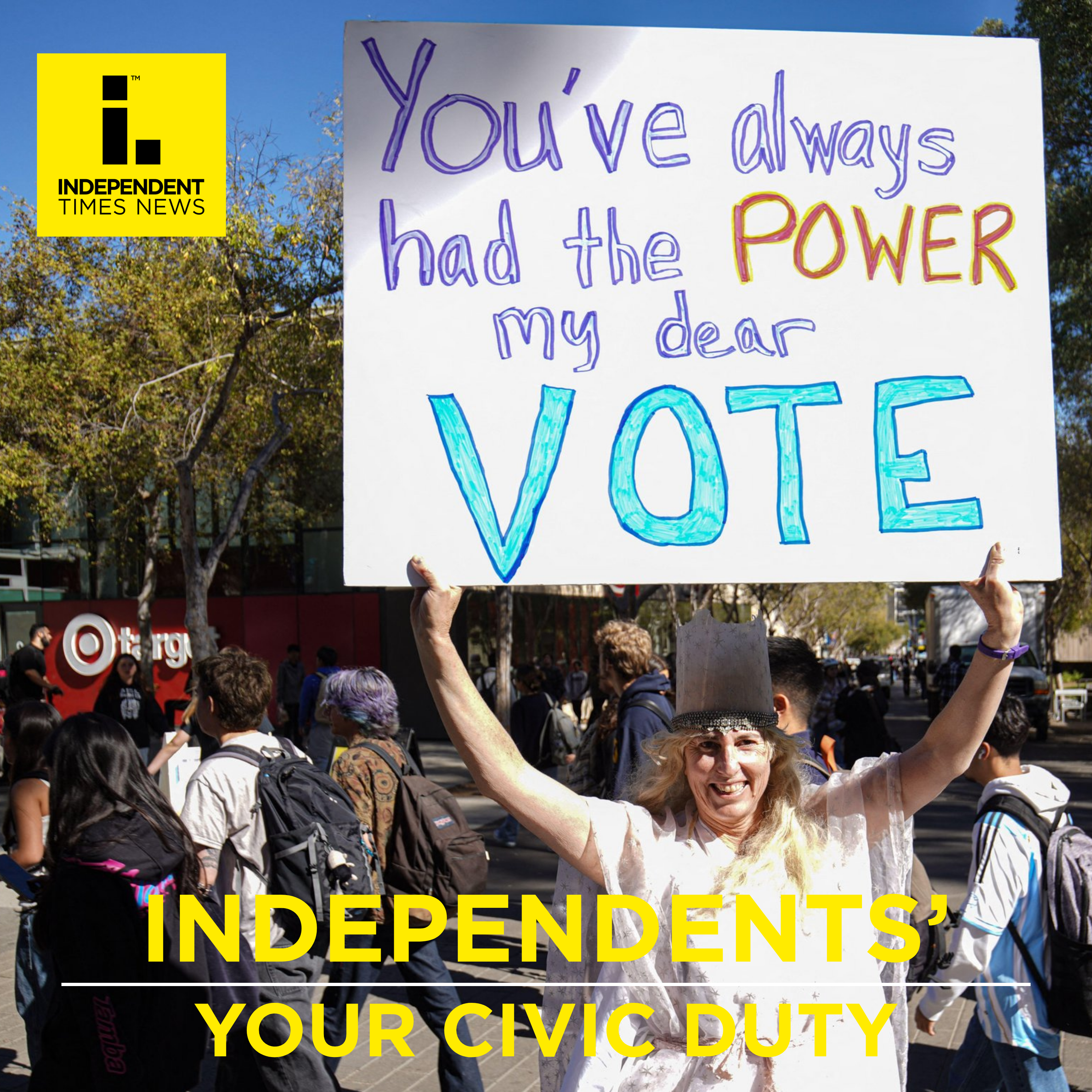
Independent voters have a critical opportunity to shape this conversation. As the SAVE America Act moves through the Senate, you can contact your U.S. Senators and Representative to share your perspective on balancing election security with voter access.
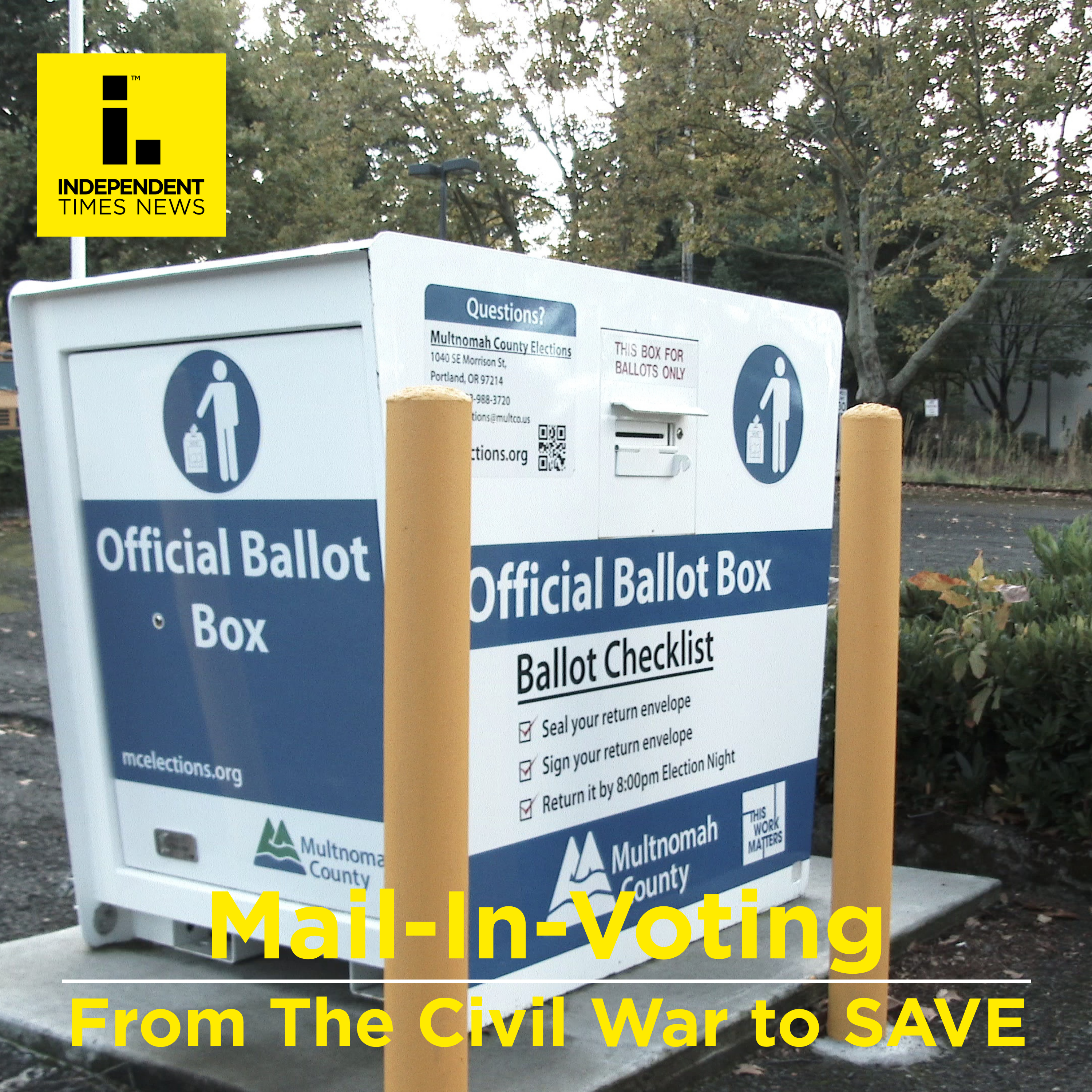
The debate over how we register to vote is inextricably linked to how we vote, particularly through mail-in ballots. Finding the right balance is essential: securing our elections without creating unnecessary barriers that could disenfranchise millions of eligible citizens.
In Part 2 of our SAVE America Act series, we will dive into the evolution of Mail-In Ballots and why they have become a flashpoint for the 2026 midterms.
OUTRO LISA SINGER
That was Leyla Gulen narrating for Independent Times News. For more news and action built for independents, head to IndTimes.news. These may not be the best of times, nor the worst, but these are undoubtedly independent times. I’m Lisa Singer. Thank you for listening, and please remember your voice matters.