Episode Transcript
SEASON 1 EPISODE 6
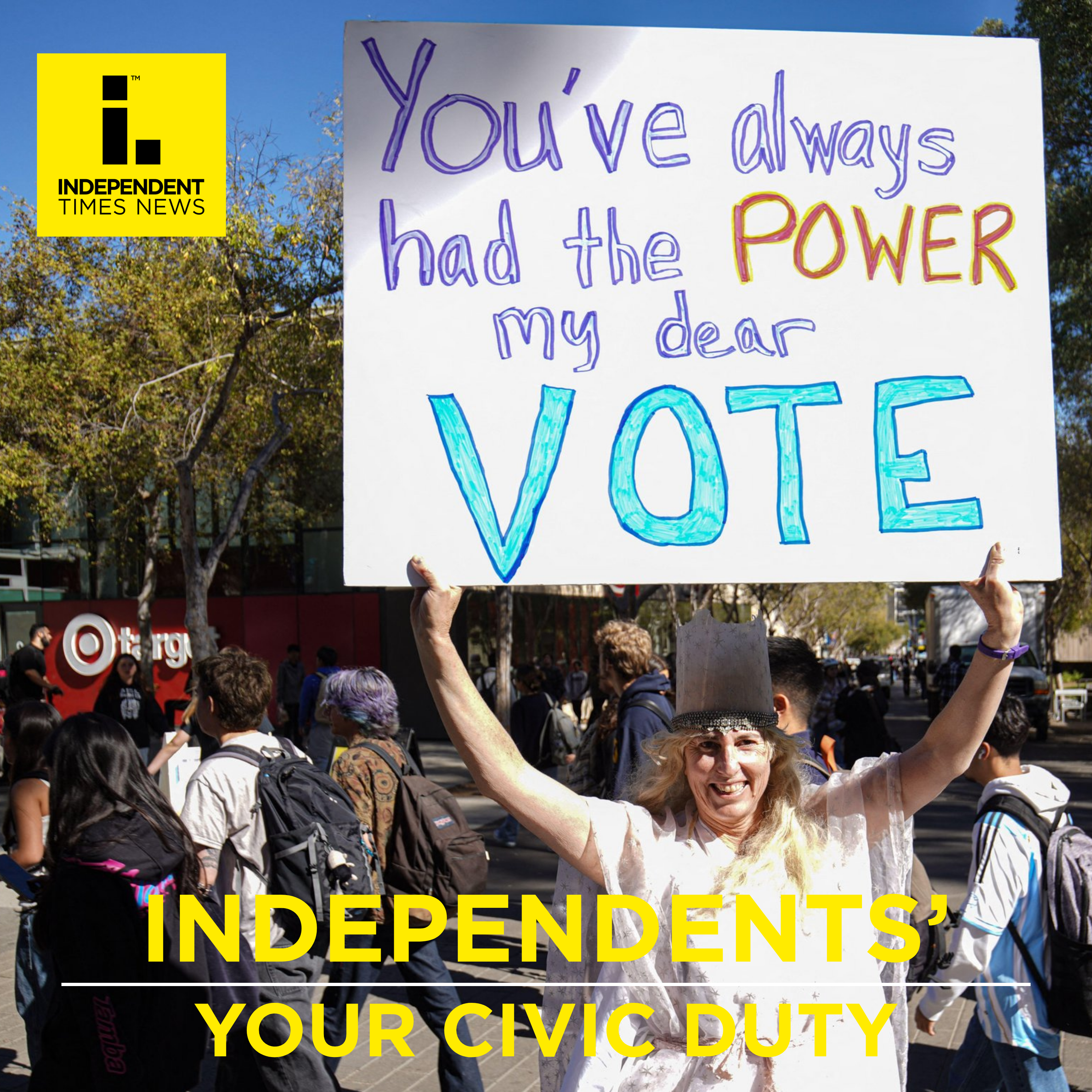
Your Civic Duty As America’s New Majority
[Clip: “Title Sequence”]
(plays)
[Clip: JFK – “Ask not what your country can do for you…”]
(plays)
LISA: It's not the best of times, nor the worst, but these are undoubtedly independent times. Welcome to Independent Times, the podcast for politically homeless independent voters navigating our polarized world. I’m your host, Lisa Singer, and I’m so grateful you could join us today.
In 1790, members of religious minorities wrote to President George Washington asking: What kind of country would the new United States be? Having known only theocracies and monarchies, they were confused and deeply concerned. Washington personally reassured numerous faith groups, including Roman Catholics, Baptists, and Quakers, of their protection. In his famous letter to the Touro Synagogue of Newport, Rhode Island, he articulated the core covenant:
"Happily, the Government of the United States, which gives to bigotry no sanction, to persecution no assistance, requires only that they who live under its protection should demean themselves as good citizens."
America had made a clear bargain: The government promised protection and liberty as long as we acted as good citizens. For generations, this concept was the bedrock of our republic. Yet, with trust in our government now at a record low of 22%, we must ask a critical question: What exactly is our civic duty to fix this mess?
We’re joined today by my co-hosts: award-winning journalist, host, and producer of FOX24 News Now, Leyla Gullen, and Emmy award-winning television news host Bryan Gallo. Welcome.
BRYAN: Thanks, Lisa. I'm glad we're tackling this. The conversation about low trust can be so discouraging. It's time to talk about what we, the people, can do about it.
LEYLA: Exactly. Apathy is the enemy of a republic. If we want to restore trust, we have to start by restoring our own sense of purpose as citizens.
LISA: It's a miracle, really. A country founded on a dream. The American dream of equality, life, liberty, and the pursuit of happiness. But here we are, and we have to ask a difficult question: If this is the design of our country, why do so many not participate? Why don't all 340 million Americans actively engage in their country's self-rule by voting, petitioning their government, protesting when things get really bad, and speaking up?
LEYLA: It’s the ultimate paradox. This beautiful, independent car of self-rule was designed
for us to drive, to make our lives better. But if you just let it sit in the garage, it's not going to get you anywhere. The freedom to make our own stupid choices—the price is civic engagement. It's paying taxes, driving on the right side of the road, and taking responsibility for the country we live in. We have to remind our listeners of something fundamental: what we appreciate appreciates; what we don't appreciate depreciates.
LISA: That’s a really powerful point. A study from Georgetown University on voter turnout found that many non-voters, particularly those who identify as independent, feel a lack of "political efficacy." In plain English, they believe their vote won't make a difference because the system is too broken or nothing will change for them. Thomas Jefferson once said, "The price of freedom is eternal vigilance." He knew that a virtuous and engaged citizenry was the most important ingredient in the American experiment.
LEYLA: Yeah, I’d like to say something here. But that's precisely the mindset that the founders warned us about. A king would love nothing more than to take power, as Jefferson warned us. A king would love to take away our access to free speech and a free press, as Madison knew all too well. And a king would love to take away our right to freedom of religion, as Washington knew too well. The price of our liberty is eternal vigilance and constant engagement. We have to make our best case to show independent voters, now the largest voting bloc, that they have the power to keep this country a democracy of self-rule.
LISA: Democracy is hard. Dictatorship is somewhat easier. And we need to do all we can to remind independent voters, even though we have no organized political power at this time, that this is a relatively new movement and that we can make a real difference. And that reminds me of a famous Margaret Mead quote that I learned on The West Wing, which can give our listeners some good inspiration. Here’s a clip of President Bartlet quoting Margaret Mead while swearing in a new staffer, Will Bailey:
[Clip: “The West Wing – President Bartlet Quotes Margaret Mead”]
(plays)
LISA: Our Founding Fathers were independents, and they literally risked their lives in defiance of the king of England. They could have been killed, every single one of them, for signing the Declaration of Independence. And there have been so many who have carried that torch. Frederick Douglass is the first that comes to mind. He spoke out consistently, begging President Lincoln to end slavery. The 1969 Stonewall activists were independent activists who sparked the fight for LGBTQ+ equality. Rosa Parks was an independent woman, literally sitting all alone on that bus and refusing to get up when she took a stand against segregation. Ida B. Wells, a famous journalist, exposed the lynchings in the South. She could have been killed, and she did it anyway. She demanded the government do something about it and step in, and it’s crazy, if you think about it, that we have to remind elected officials as often as we do that they are there to serve us and are accountable to us. But it is the truth, and it is the independents throughout history who have made the progress we enjoy today. And I would argue that today, more than ever, it is the independent voters who need to carry that torch. Are they the ones who are going to be able to demand the much-needed reforms we need in this country? Let’s remind the government to keep helping us move forward. We’re not asking for any handouts; we’re just asking for a level playing field.
LEYLA: Yeah, yeah. It reminds me of what Thomas Jefferson once said, “The care of human life and happiness, and not their destruction, is the first and only legitimate object of good government.”
LISA: That’s the most precise and simplest definition of government’s role I’ve ever heard. It doesn’t get simpler than this. Their job is our well-being and our happiness. Period. Mic drop moment for sure. But of course, we’re doing this episode today to remind our listeners that it is our job to hold the representatives accountable, and the only way to do that is by voting and by using our First Amendment rights to speak up peacefully to demand that they represent us. or they are going to ignore us. I mean, it is just that simple. Unless we vote and unless we speak up, they will ignore us. And it reminds me of this incredible story of Fredrick Douglass visiting President Lincoln at the white house. Dave Chapelle shared this story when he hosted Saturday Night Live the first Saturday night after Donald Trump won his first term back in 2016. I know we have a lot to get to, but I have to play that clip. It’s incredible.
[Clip: “Dave Chappelle Hosting SNL (2016) – The Frederick Douglass Story”]
(plays)
LISA: That’s it, Douglass showed us how it’s done. He showed us how to demand inclusion. He showed up at the white house, he showed up day after day, speaking out against slavery, and it made a big difference. And it's always people like Douglas, it’s always those independent voices that keep our government true to its purpose.
LEYLA: That is such a powerful idea. And that freedom, that bargain, is laid out beautifully in the First Amendment. The right to vote is central, but the First Amendment is the operating manual for a functioning democracy. You know. it gives us five powerful tools: freedom of religion, freedom of speech, freedom of the press, the right to peaceably assemble, and the right to petition the government. So These are the superpowers of the American citizen whether we realize it or not.
LISA: I love the way you put that, superpowers of the American citizen. So let's look at how Americans have used these tools to fulfill their civic responsibilities and hold our elected officials accountable and basically demand that the country move forward and it becomes a better country and more perfect union, as Washington said. So before we dive into some examples, can you both just take a moment and help our listeners clarify the difference between civic duty and civic responsibility.
BRYAN: Yeah I’ll jump in real quick. I think "duty" feels more formal. Right. It’s the things we are expected to do as a matter of course for the republic to function. Things like voting, obeying the law, serving on a jury if called, and paying taxes. These are non-negotiable pillars.
LEYLA: And "responsibility," to me, feels more personal and proactive. It’s the stuff that goes beyond the bare minimum. It’s about staying informed, not just by tuning in to the news, but by seeking out different perspectives. It’s about engaging with your community, attending town hall meetings, or volunteering for a cause you believe in. A responsible citizen understands that the government is not some distant entity; it's a reflection of us. It is the community of people doing things for the common good.
LISA: I could not agree more. Community and real engagement are everything. Last week, my neighbor won our village’s beautification award for her gorgeous landscaping, so I went to the town hall meeting to cheer her on. I got to meet the mayor, watch the Rotary Club get honored, see two new firefighters sworn in, and then clap as they handed out awards to 31 homes, including hers. I walked out of there on an absolute cloud nine. It was such a sweet reminder of how lucky we are to live in a country where we can show up to a local meeting and see good, tangible things happening right in front of us. And yet… most days, most Americans don’t feel that way at all. Most days, it feels like the bigger system is rigged, like no one in power is really listening, and it’s so easy to check out. So many people genuinely believe it doesn’t matter who wins, Republican or Democrat, nothing ever changes. Trust in government is at a historic low of 22%, and for many independents, that hopelessness is crushing. That’s why I went back to this incredible Frontline PBS documentary on the 2020 election and pulled a few clips. These are everyday voters left, right, and in-between putting that exhaustion and frustration into their own words… but also that quiet, stubborn refusal to completely walk away. Take a listen.
[Clip: “Frontline PBS Revisits Voters from the 2020 Election”]
(plays)
BRYAN: But history in our country shows engagement does work. When you think things couldn't get worse, they get better when Americans come out and vote, and petition, and protest, and use their voices. It’s proven.
LEYLA: Yeah, and we have decades of proof that it works. You mentioned the First Amendment, Lisa. Let's look at a couple of incredible success stories powered by these rights. Take the right to "peaceably assemble." The Civil Rights Movement in the 1960s was a masterclass in this. From the marches in Selma to the sit-ins at lunch counters, people used their right to protest to force a nation to confront its conscience. Their assembly wasn't just a gathering; it was a demand for justice that led to the Civil Rights Act and the Voting Rights Act. It fundamentally changed America.
LISA: Exactly, Leyla, those marches, those sit-ins… they didn’t just make noise, they changed laws and changed hearts. And nobody explained why non-violent protest is so powerful better than Dr. King himself. Here he is in a rare 1961 BBC interview, listen to how clearly and calmly he lays out why peaceful assembly is the ultimate weapon for a citizen who feels powerless.
[Clip: “MLK on BBC’s Face to Face (1961) – The Power of Peaceful Protest”]
(plays)
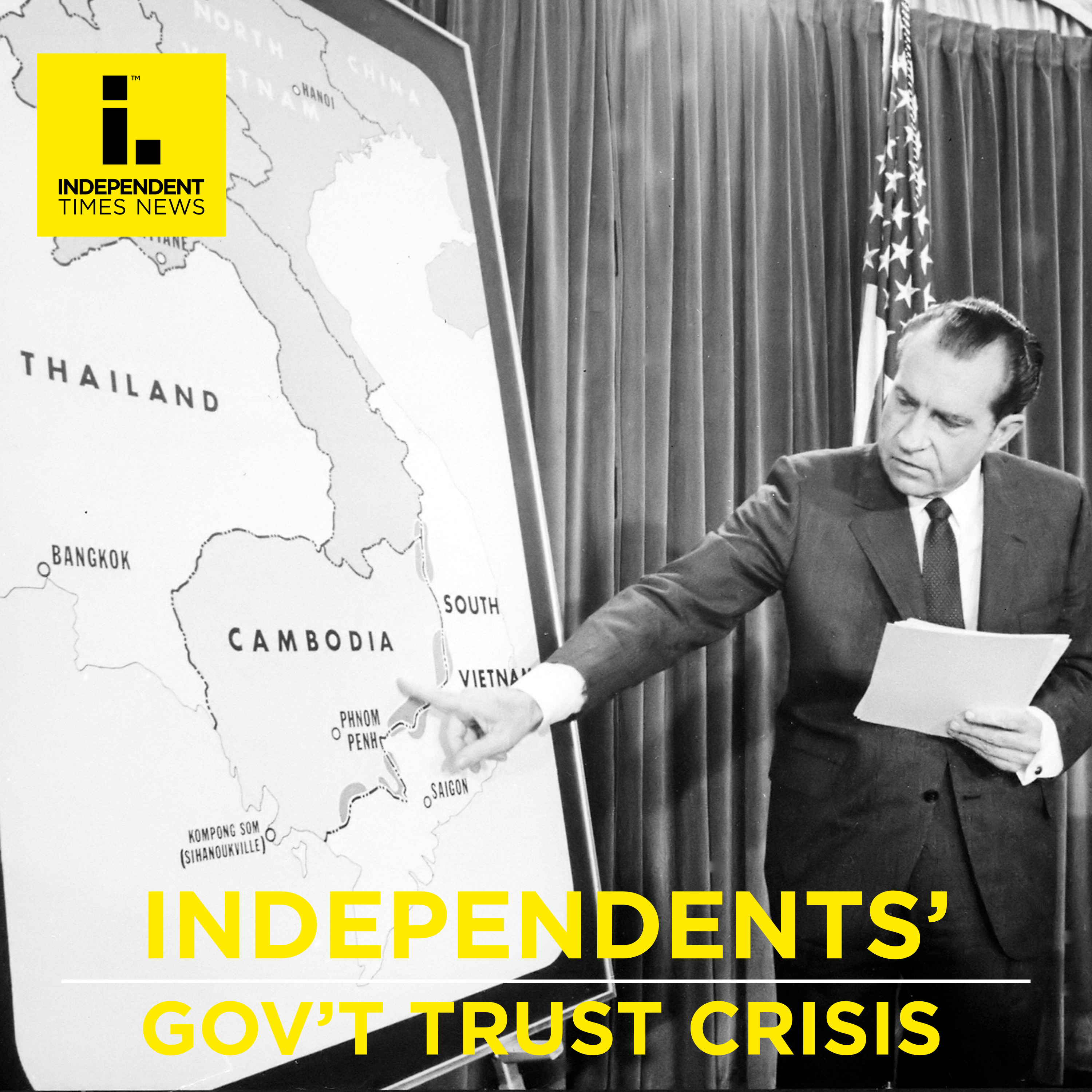
BRYAN: And think about the right to a "free press." The role of journalists in the Watergate scandal is a perfect example. While the government was covering up crimes and abusing its power, two reporters from the Washington Post, Bob Woodward and Carl Bernstein, used their right to a free press to investigate, expose the truth, and hold the most powerful man in the world accountable. Their reporting led to the resignation of a president and reminded everyone that no one is above the law.
LISA: Those are two incredible, foundational moments in our history. And what about the right to "petition our government"? Was there a major success story there?
LEYLA: Absolutely. The campaign for women's suffrage was a decades-long effort that relied heavily on petitioning. For years, women across the country tirelessly collected signatures, sending thousands upon thousands of petitions to Congress. They used this right to show lawmakers the widespread public support for their cause, even though they couldn't vote themselves. Their collective voice, combined with other grassroots efforts, eventually led to the passage of the 19th Amendment, which enfranchised women and doubled the size of the American electorate overnight.
LISA: That’s such an important point. We have to remember that progress isn’t a given; it’s the result of countless people fulfilling their civic duties and responsibilities. And when we lose sight of that, we start to take our freedoms for granted. It's a phenomenon that's so uniquely American. We are such a nation of impatient people.
LEYLA: Yeah, patient for sure, my goodness. Well, that's where the global context comes in. You know, we're so focused on our imperfections and our backsliding that we forget to look at the rest of the world. This is very important. The majority of the world's population does not live in a full democracy where they can speak freely, assemble peacefully, or vote for their leaders. They can’t demand accountability from their government without risking their lives. We have to remember how precious these freedoms are, even with our imperfections.
BRYAN: that's another podcast. All right, let me jump in. Pew Research numbers confirm this. We are an outlier. We have a political system that, despite its many flaws, gives us the power to change it. We have to remember that the price of living with these freedoms is staying informed, engaged, and most importantly, voting. That's our civic duty. That's the bargain.
LISA: And that bargain is under constant threat. It's not just a history lesson, it’s a living, breathing fight. We’ve seen a wave of recent legislative efforts to restrict voting. Since the 2020 election, at least 30 states have enacted 79 restrictive voting laws. A vast majority of those states are Republican-controlled. We’ve also seen attempts at the federal level to pass legislation that would expand voting rights, but they were killed by partisan opposition. For example, the For the People Act and the John Lewis Voting Rights Advancement Act were championed both by Democrats but were both blocked by a Republican-led filibuster in the Senate.
LEYLA: Yeah, and The Supreme Court has also weighed in, they’ve issued rulings that have weakened the protections of the Voting Rights Act. In the landmark 2013 case of Shelby County v. Holder, the court's conservative wing voted to eliminate the requirement that states with a history of discrimination must get federal approval before changing their voting laws.
LISA: Exactly, Leyla, that one Supreme Court decision in 2013 didn’t just tweak the Voting Rights Act… it gutted the single most powerful protection it had. Overnight, states with long histories of discrimination were free to change voting laws without any federal oversight. The effects were immediate, and they’re still being felt today. Here’s a quick, clear breakdown of what Shelby County v. Holder actually did and why so many people say it opened the floodgates.
[Clip: “Shelby County v. Holder – The Ruling That Weakened the Voting Rights Act”]
(plays)
LISA: Shelby County v. Holder really drives home that the fight for equal access to the ballot is still very much alive. We’ve made incredible strides, Black Americans, women, 18-year-olds, all finally getting the vote, but the work is nowhere near finished. Dr. King said it best: ‘The oppressor never gives freedom voluntarily; the oppressed have to demand it.’ To remind us just how urgent and how righteous that demand was, here’s President Lyndon Johnson addressing Congress in March 1965, just days after Bloody Sunday on the Edmund Pettus Bridge. Listen to the way he claims the Voting Rights Act not as a Democratic party cause or a Southern cause, but as America’s cause.
[Clip: “LBJ’s Historic “We Shall Overcome” Speech to Congress (1965)”]
(plays)
LISA: That speech still hits me in the chest every single time. And here we are, sixty years later, still fighting the next chapter of the same battle. Today, the most significant remaining barrier to full ballot access affects us, the fastest-growing group of voters in America: independents.
Right now, in 22 states, roughly 27 million of us are entirely shut out of taxpayer-funded presidential primaries simply because we refuse to join a political party. When we finally break open those primaries and bring in ranked-choice voting, we will see the political environment change overnight. It is you, the independent voter, who will heal our fractured nation. We need you now more than ever to rise and make sure it happens.
And nobody has been swinging the voting rights hammer longer, harder, or more selflessly than our Independent Hero of the Week: The League of Women Voters. Born in 1920 out of the women’s suffrage victory, still 100% nonpartisan, still grassroots, still showing up every single day with tools like VOTE411.org so every single voter has the facts, no spin, no agenda. Let’s hear straight from them why, more than a hundred years later, they’re still in the fight to protect your vote.
[Clip: “League of Women Voters – Our Independent Hero of the Week”]
(plays)
LISA: Thank you, Bryan and Leyla. This has been a fantastic conversation. It’s so important to remember that progress requires a great deal of effort, but it’s still possible.
BRYAN: Keep digging for the truth, Lisa.
LEYLA: Thanks. Question everything!
LISA: We opened this episode with a tricky question: What’s our share of the mess our politics is in right now… and what are we actually going to do about it? Well, here’s your assignment starting today: four simple things:
1. Make sure you’re registered to vote (and help one friend do the same).
2. Put every upcoming election in your district In your calendar: local, state, and midterm, all of it.
3. Call or Email Your state Representatives to Demand: Open Primaries and Ranked-Choice Voting. Be Polite, Be Loud, and Be Relentless
4. Subscribe To At Least One Real Newspaper; Local or National, so you’re never flying blind again.
We have all this information and more on our website, IndependentTimes.news
Thanks, again Bryan and Leyla for joining us today. And a big thanks to our listeners for joining our community at Independent Times, where politically homeless voters find clarity in a polarized world. You’re not alone in this journey.
Until next time, please follow, like, subscribe, share, and keep charting your own path.